
 Pусский
 English
 中文
中文
 ภาษาไทย

Thailand Retirement Visa Guide and Best Places to Retire
Key Highlights
- The Thailand retirement visa (Non-Immigrant O Visa) is available to foreigners aged 50 and older, with options for 1-year, 5-year, and 10-year stays.
- Financial requirements start at 800,000 THB ($22,000 USD) in a Thai bank or a monthly income of 65,000 THB ($1,800 USD).
- The cost to retire in Thailand ranges from $1,000 to $3,000+ per month, depending on lifestyle and location.
- The best retirement places in Thailand include Bangkok, Chiang Mai, Hua Hin, Koh Samui, and Phuket.
- Phuket was named among Forbes' best retirement destinations for 2025, with over 100,000 foreign residents and world-class healthcare.
- Banyan Group Residences offers a range of Phuket villas for sale options within the prestigious Laguna Lakelands community.
Table of Contents
- Introduction to Retiring in Thailand
- What Is the Thailand Retirement Visa?
- Types of Retirement Visas in Thailand
3.1 Non-Immigrant O Visa (Basic Retirement Visa)
3.2 Non-Immigrant O-A Visa (Long Stay, 1 Year)
3.3 Non-Immigrant O-X Visa (Long Stay, 5–10 Years)
3.4 Long-Term Resident (LTR) Visa, Wealthy Pensioner Category - Thailand Retirement Visa Requirements
- How to Apply and What It Costs
5.1 Apply From Your Home Country
5.2 Apply From Within Thailand
5.3 Visa Fees
5.4 Ongoing Requirements - Cost to Retire in Thailand
- Best Retirement Places in Thailand
7.1 Bangkok
7.2 Chiang Mai
7.3 Hua Hin
7.4 Koh Samui - Why Phuket Is a Top Retirement Destination
- Find Your Retirement Home with Banyan Group
- Tips for a Smooth Retirement Transition
- Frequently Asked Questions
Your retirement savings could stretch nearly twice as far in Thailand as they would in the most Western countries. That simple math is why Thailand continues to attract retirees from around the world, and why Forbes recently named four Thai cities among its top global retirement destinations.
Affordable healthcare, year-round warm weather, and a culture that genuinely welcomes foreign residents all add to the appeal. The Thailand retirement visa gives retirees aged 50 and over a clear route to long-term residency. And because the cost advantage extends to real estate too, many retirees eventually invest in property, particularly in Phuket, where a growing range of Phuket villa for sale options now caters specifically to international buyers.
This guide covers the visa process, the cost to retire in Thailand, and the best retirement places in Thailand so you can make an informed decision.
What Is the Thailand Retirement Visa?
The Thailand retirement visa is officially known as the Non-Immigrant O Visa (for retirement purposes). It is designed for foreigners aged 50 and over who want to live long-term in Thailand without employment. Key benefits include:
- Extended stay of up to one year per visa cycle
- Unlimited renewals as long as you continue meeting the requirements
- In-country renewal, so you do not need to leave Thailand each year
- A practical path toward long-term residency
Types of Retirement Visas in Thailand
Thailand offers several visa options depending on your situation and financial capacity.
Non-Immigrant O Visa (Basic Retirement Visa)
- 90-day initial stay, extendable to one year at a Thai immigration office
- Popular for those already in Thailand on another visa type
- Does not require health insurance or police clearance when applied for in-country
Non-Immigrant O-A Visa (Long Stay, 1 Year)
- Applied from your home country before traveling
- 1-year validity with multiple entries
- Requires health insurance (minimum 400,000 THB inpatient / 40,000 THB outpatient)
- Police clearance and medical certificate required
Non-Immigrant O-X Visa (Long Stay, 5–10 Years)
- Available to citizens of 18 eligible countries, including the USA, UK, Australia, Japan, Germany, and Canada
- 5-year validity, renewable once for a total of 10 years
- Higher financial requirement: 3 million THB in a Thai bank, or 1.8 million THB deposit plus 1.2 million THB annual income
- Health insurance with 3 million THB coverage is mandatory
Long-Term Resident (LTR) Visa, Wealthy Pensioner Category
- For retirees with $80,000+ in annual income or substantial assets
- 10-year renewable stay
- Fewer renewal requirements and additional perks, including work-permit flexibility for dependents
Thailand Retirement Visa Requirements
To qualify for any Thailand retirement visa, you must be at least 50 years old at the time of application. Financial requirements for the standard O-A visa include one of the following:
- Option 1: 800,000 THB (~$22,000 USD) deposited in a Thai bank account for at least two months before application
- Option 2: Monthly pension or income of at least 65,000 THB (~$1,800 USD)
- Option 3: A combination of deposit and annual income totaling 800,000 THB
Funds must be transferred from overseas, and immigration requires international transfer codes on your bank book.
Additional documents include:
- Valid passport with at least one year of remaining validity
- Passport-sized photos
- Completed visa application form
- Proof of address in Thailand (for in-country applications)
- Police clearance certificate (for applications from abroad)
- Medical certificate (for applications from abroad)
- Health insurance meeting Thai government minimums (mandatory for O-A and O-X visas)
How to Apply and What It Costs
Option 1: Apply From Your Home Country
- Submit documents to a Thai Embassy or Consulate
- Receive your O-A visa before traveling
- Arrive in Thailand with your retirement visa already approved
Option 2: Apply From Within Thailand
- Enter on a Non-Immigrant O visa (90 days)
- Wait at least 60 days before applying for an extension
- Visit your local immigration office to submit the retirement extension
Visa Fees:
- Non-Immigrant O: ~$80 (single entry) or ~$200 (multiple entry)
- Non-Immigrant O-A: ~$200 (multiple entry)
- Non-Immigrant O-X: ~$400 (multiple entry)
Ongoing Requirements:
- 90-day reporting: Notify immigration of your address every 90 days (online, by mail, or in person)
- Re-entry permit: Required before any international travel to keep your visa valid

Cost to Retire in Thailand
It is important to understand how long you can stretch your money when retiring in Thailand. The cost to retire in Thailand varies by location and lifestyle, but here is a general monthly breakdown:
- Budget lifestyle: $1,000–$1,500 USD (30,000–45,000 THB) - works well in smaller cities like Chiang Mai or Hua Hin
- Comfortable lifestyle: $1,500–$2,500 USD (50,000–80,000 THB) - the sweet spot for most retirees
- Luxury lifestyle: $3,000+ USD (100,000+ THB) - resort-style living in Bangkok or Phuket
Typical monthly expense breakdown:
- Rent: $400–$1,200 (depending on location and property type)
- Food: $300–$500 (mix of local and Western dining)
- Utilities: $75–$150 (electricity, water, internet)
- Health insurance: $50–$200
- Transportation: $50–$150
- Entertainment/leisure: $200–$400
According to multiple cost-of-living indexes, Thailand is approximately 45–50% cheaper than in the United States, the United Kingdom, Germany, and Australia. Rent savings are even steeper, ranging from 40% to 70% less depending on the country and city. The required 65,000 THB monthly income for the visa serves as a solid baseline for comfortable living.
Best Retirement Places in Thailand
Forbes' 2025 list spotlighted four Thai destinations - here are the best retirement places in Thailand for different lifestyles:
Bangkok
- World-class healthcare, modern infrastructure, and a diverse expat community
- Endless dining, shopping, and entertainment options
- Best for retirees who want urban convenience
- Trade-offs: traffic congestion and pollution
Chiang Mai
- Lower cost to retire in Thailand than almost anywhere else on this list
- Rich Lanna culture, mountain scenery, and a tight-knit expat community
- Best for those seeking affordability and authenticity
- Trade-offs: burning season (February–March) and limited beach access
Hua Hin
- Royal seaside town, just 2.5 to 3 hours from Bangkok
- Established expat networks and excellent golf courses
- Best for retirees who want coastal living with easy capital-city access
- Trade-offs: a smaller international community than Phuket
Koh Samui
- Laid-back island lifestyle with beautiful beaches and a growing foreign community
- Best for retirees seeking a slower rhythm
- Trade-offs: more isolated with fewer direct international flights
Why Phuket Is a Top Retirement Destination
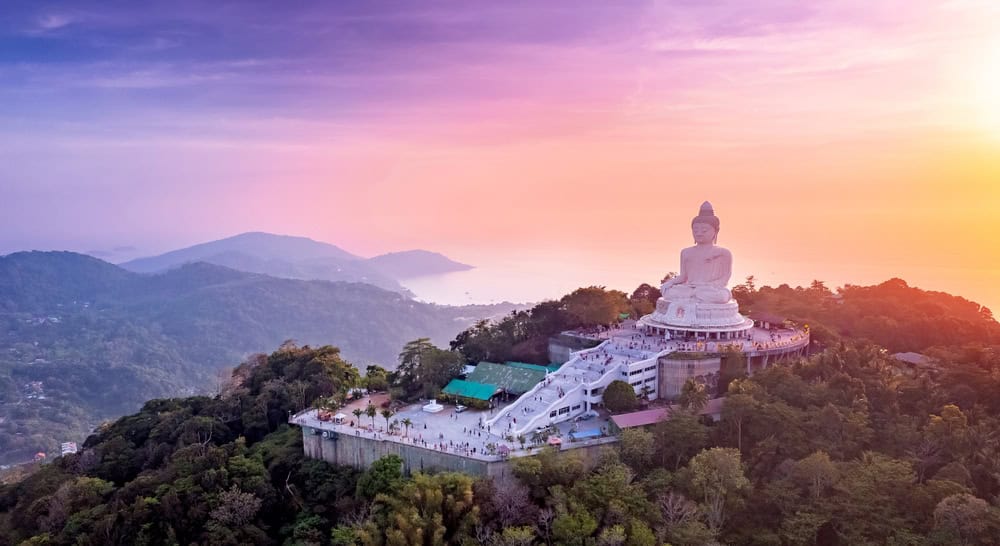
Among the best retirement places in Thailand, Phuket stands out for its unique combination of island beauty and urban convenience. Thailand's largest island is home to roughly 450,000 registered residents and an estimated 115,000 expatriates from dozens of countries. Phuket International Airport offers direct flights to cities across Europe, Australia, and Asia, and Bangkok is just a 1 to 1.5-hour flight away.
Lifestyle options for every preference:
- Patong: Vibrant nightlife and social energy
- Rawai & Nai Harn: Relaxed atmosphere favored by retirees
- Laguna & Bang Tao: Upscale resort-style living
- Kathu & Phuket Town: More affordable, close to local markets and authentic culture
- Chalong: Central location near hospitals and fitness facilities
Why retirees love Phuket:
- Healthcare: JCI-accredited hospitals like Bangkok Hospital Phuket with English-speaking staff at a fraction of Western costs
- Infrastructure: International schools, high-speed internet, modern shopping centers, and world-class golf courses
- Climate: Year-round tropical weather with an average temperature of 28°C (82°F)
- Recognition: Named among Forbes' top retirement destinations in Thailand for 2025
A comfortable expat lifestyle in Phuket typically costs 80,000 to 150,000 THB per month.
Find Your Retirement Home with Banyan Group
For retirees considering a Phuket villa for sale,Banyan Group Residences offers some of the island's most prestigious options. Banyan Group is an internationally recognized developer with decades of experience serving international buyers across Asia, Mexico, Spain, and South Korea. Their properties are structured with foreign ownership in mind, offering both freehold residences and leasehold options.
Within the renowned Laguna Phuket integrated resort destination, Banyan Group's Laguna Lakelands community spans one square kilometer of verdant hills, forests, and lakes. It is Phuket's largest residential community, featuring a private beachfront club.
Property options at Laguna Lakelands:
- Laguna Lakelands Waterfront Villas - luxury 4-bedroom pool villas with absolute waterfront overlooking the lagoon
- Laguna Lakelands Waterside Residences - 1, 2, and 3-bedroom condominiums with private pools on selected units
Skypark Elara Lakelands Phuket - 1, 2, and 3-bedroom condominiums
Additional Banyan Tree Beach Residences in Phuket:
- Aegir: 4-bedroom oceanfront villas with private pools
- Mazu: Luxury 4-bedroom pool villas
- Sirena: 3-bedroom residences with private pools
- Varuna: 3-bedroom residences and 4-bedroom penthouses with private pools
- Nammu: 3-bedroom townhomes with private pools
Owner benefits include:
- Access to Laguna Phuket resort amenities (golf courses, spas, restaurants, beach club)
- Exclusive Sanctuary Club membership with global privileges
- Professional property management
- Full security, zero maintenance worries, and a built-in community
- The ideal blend of privacy, social opportunity, and resort-style convenience
Tips For A Smooth Retirement Transition
- Visit Thailand for a few weeks or months before committing to a location
- Work with a reputable visa agent for your first application
- Open a Thai bank account early in the process
- Secure health insurance that meets visa requirements before you apply
- Join expat groups and online communities before arriving
- Consider renting before buying to find the area that fits your lifestyle
- Stay informed about visa rule changes, as Thailand periodically updates requirements
Thailand offers an exceptional retirement lifestyle that blends affordability, world-class healthcare, and welcoming communities. Phuket, in particular, delivers international diversity, modern infrastructure, and tropical beauty that few destinations can match.
If you are looking to invest in a permanent home, Banyan Group Residences atLaguna Lakelands provides a seamless path to owning a Phuket villa in one of the island's most prestigious addresses.
Explore the full range of properties atbanyangroupresidences.com or contact their team for a personalized consultation.
References:
- Forbes names Thailand among top global retirement destinations for 2025. (2025, October 5). Pattaya Mail. Retrieved February 6, 2026, from https://www.pattayamail.com/latestnews/news/forbes-names-thailand-among-top-global-retirement-destinations-for-2025-521430
- Retirement Visa in Thailand. (n.d.). ThaiEmbassy.com. Retrieved February 6, 2026, from https://www.thaiembassy.com/thailand-visa/retirement-visa
- Cost of Retiring in Thailand: How Much Do You Need in Thailand? (2025, February 21). ExpatDen. Retrieved February 6, 2026, from https://www.expatden.com/thailand/cost-of-retiring-in-thailand/
- Life as an Expat in Phuket in 2025: A Complete Guide. (n.d.). Crown Continental. Retrieved February 6, 2026, from https://www.crowncontinental.com/post/life-as-an-expat-in-phuket-a-complete-guide
Disclaimer: The information contained herein, including but not limited to pricing, availability, specifications, and promotional offers, is provided for general reference only and does not constitute a legal offer. Banyan Group Residences reserves the right to amend, update, or withdraw any information without prior notice. Terms and conditions apply. Prospective purchasers are advised to contact an authorized Banyan Group Residences sales representative to confirm current details prior to making any purchase decision.
Thai property laws are subject to change. Always consult a qualified lawyer and conduct independent due diligence before making any property purchase in Thailand